Fundraised
₹0
Goal
₹151,000
0% Funded
Secure Donation
Donate Now
By donating, you agree to our terms of service.
100% of your donation (excluding payment gateway fees) goes directly to this cause.
About the Campaign
In Hinduism, the cow is revered not merely as an animal, but as Gau Mata (Mother Cow)—a sacred being embodying divinity, purity, and selfless service to humanity. While this reverence stems from deep spiritual roots, its practical application, especially in an urban environment like Delhi, faces unique challenges. The dual practices of Gau Mata Aarti (ritual worship) and Sewa (active service) are vital ways devotees express their devotion and ensure the well-being of these sacred creatures.
Gau Mata Aarti: The Ritual of Adoration
Gau Mata Aarti is a ritualistic worship that venerates the cow as a living deity. It is a powerful expression of gratitude and reverence.
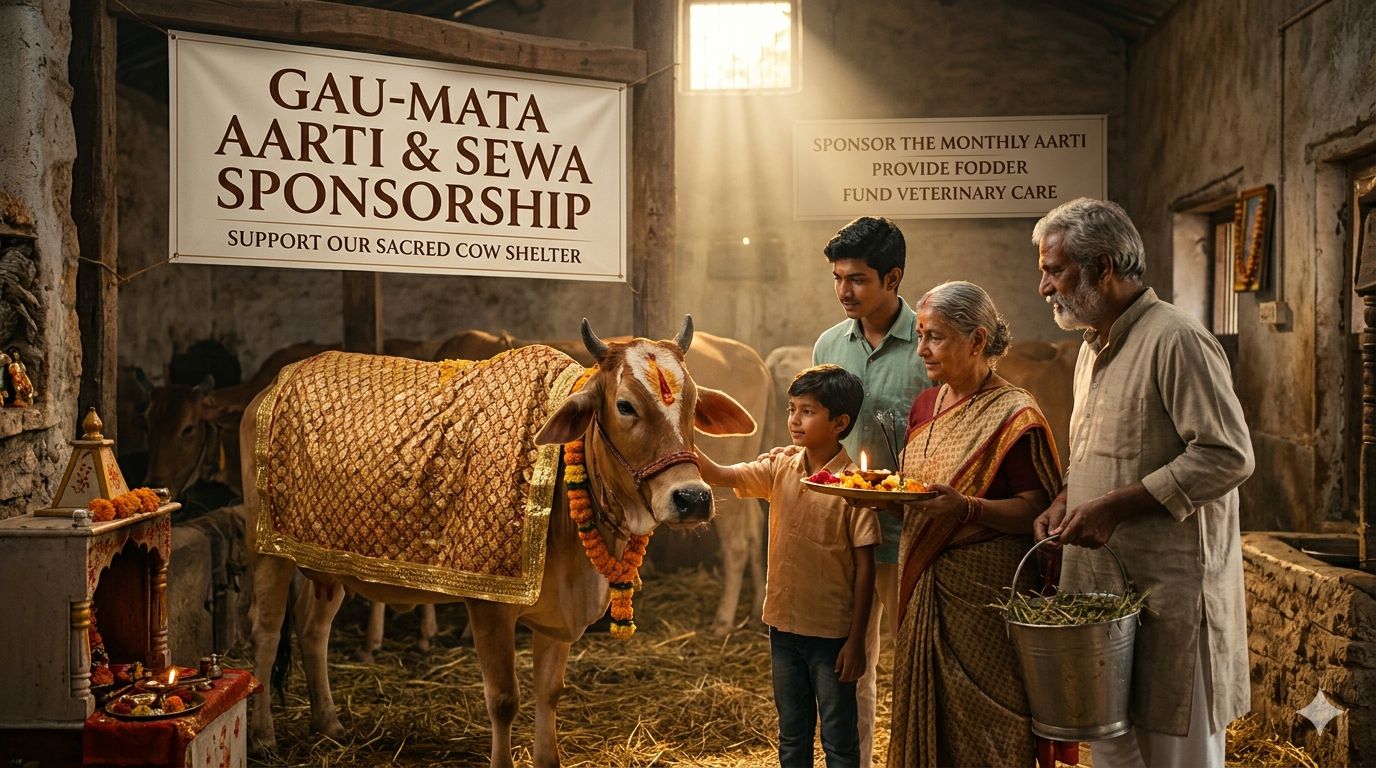
Significance: In Hindu cosmology, all deities and cosmic elements are believed to reside within the form of the cow. Performing Aarti is a way to acknowledge this inherent divinity. It is often believed that performing Gau Aarti can bring peace, prosperity, and spiritual merit. The Ritual (Aarti): Preparation: The ceremony often takes place at a Gaushala (cow shelter), a temple, or sometimes in traditional homes. The cow chosen for worship is bathed, groomed, and decorated with garlands of marigolds, turmeric, and vermilion tilaks on her forehead. The Ceremony: A circular tray (thali) holding a lit oil lamp (diya), flowers, incense, and camphor is used. The worshiper circles the lamp clockwise around the cow's face several times, often to the accompaniment of devotional songs (bhajans) and hymns dedicated to Gau Mata. Offerings: Following the light ritual, offerings (prasad) are made. These typically include fresh green fodder, bananas, jaggery (gur), and sweetened rotis. This act of feeding symbolizes sharing one's resources with the divine mother. Context in Delhi: Throughout Delhi, many local neighborhood temples maintain a cow or have dedicated spots where devotees gather, especially on auspicious days like Ekadashi or Gopa Ashtami, to perform the Aarti. It serves as a moment of quiet connection and spiritual grounding amidst the urban rush. Gau Mata Sewa: The Path of Compassionate Action
While Aarti is the ritualistic devotion, Gau Mata Sewa is the practical application of that devotion through active, compassionate service. Sewa (service) is considered the highest form of worship in Hinduism, especially when directed toward those who cannot speak for themselves.
The Scope of Sewa: Daily Care: This is the most direct form of service, typically carried out within Gaushalas. It involves the rigorous physical labor of feeding, watering, cleaning the living quarters, and ensuring the general comfort of the cows. Medical Care: Many cows in shelters are elderly, injured (often in street accidents), or suffering from illness (such as plastic ingestion). Sewa includes funding or assisting with veterinary treatments, wound dressings, and chronic condition management. Financial Support: For those who cannot physically assist, Sewa manifests as donating funds to established Gaushalas like Nandi Shala or sponsoring specific cows. This ensures they have regular nutrition, shelter, and medical attention. The Need in Delhi: The plight of abandoned bulls and cows in a large metropolis like Delhi highlights the urgent need for Sewa. With decreasing grazing lands and changing dairy economics, many animals are left to forage in landfills. Gaushalas serve as vital sanctuaries. The Impact of Sewa: Performing Gau Mata Sewa is believed to cleanse the heart, foster humility, and cultivate a sense of responsibility toward all living creatures. It transforms abstract devotion into concrete, beneficial action. Bridging Faith and Responsibility
In the heart of Delhi, the smoke of Aarti from neighborhood temples often mingles with the dusty reality of the streets. Gau Mata Aarti and Sewa are two sides of the same spiritual coin, balancing the internal devotion with the external responsibility.
While the ritual provides a moment of spiritual communion, Sewa ensures that the object of that devotion—the living Gau Mata—receives the tangible care, dignity, and compassion she deserves, especially when the sacred ideal confronts the modern urban reality. Supporting these initiatives is an active way to maintain the ancient connection between the community and its sacred protector.
Gau Mata Aarti: The Ritual of Adoration
Gau Mata Aarti is a ritualistic worship that venerates the cow as a living deity. It is a powerful expression of gratitude and reverence.
Significance: In Hindu cosmology, all deities and cosmic elements are believed to reside within the form of the cow. Performing Aarti is a way to acknowledge this inherent divinity. It is often believed that performing Gau Aarti can bring peace, prosperity, and spiritual merit. The Ritual (Aarti): Preparation: The ceremony often takes place at a Gaushala (cow shelter), a temple, or sometimes in traditional homes. The cow chosen for worship is bathed, groomed, and decorated with garlands of marigolds, turmeric, and vermilion tilaks on her forehead. The Ceremony: A circular tray (thali) holding a lit oil lamp (diya), flowers, incense, and camphor is used. The worshiper circles the lamp clockwise around the cow's face several times, often to the accompaniment of devotional songs (bhajans) and hymns dedicated to Gau Mata. Offerings: Following the light ritual, offerings (prasad) are made. These typically include fresh green fodder, bananas, jaggery (gur), and sweetened rotis. This act of feeding symbolizes sharing one's resources with the divine mother. Context in Delhi: Throughout Delhi, many local neighborhood temples maintain a cow or have dedicated spots where devotees gather, especially on auspicious days like Ekadashi or Gopa Ashtami, to perform the Aarti. It serves as a moment of quiet connection and spiritual grounding amidst the urban rush. Gau Mata Sewa: The Path of Compassionate Action
While Aarti is the ritualistic devotion, Gau Mata Sewa is the practical application of that devotion through active, compassionate service. Sewa (service) is considered the highest form of worship in Hinduism, especially when directed toward those who cannot speak for themselves.
The Scope of Sewa: Daily Care: This is the most direct form of service, typically carried out within Gaushalas. It involves the rigorous physical labor of feeding, watering, cleaning the living quarters, and ensuring the general comfort of the cows. Medical Care: Many cows in shelters are elderly, injured (often in street accidents), or suffering from illness (such as plastic ingestion). Sewa includes funding or assisting with veterinary treatments, wound dressings, and chronic condition management. Financial Support: For those who cannot physically assist, Sewa manifests as donating funds to established Gaushalas like Nandi Shala or sponsoring specific cows. This ensures they have regular nutrition, shelter, and medical attention. The Need in Delhi: The plight of abandoned bulls and cows in a large metropolis like Delhi highlights the urgent need for Sewa. With decreasing grazing lands and changing dairy economics, many animals are left to forage in landfills. Gaushalas serve as vital sanctuaries. The Impact of Sewa: Performing Gau Mata Sewa is believed to cleanse the heart, foster humility, and cultivate a sense of responsibility toward all living creatures. It transforms abstract devotion into concrete, beneficial action. Bridging Faith and Responsibility
In the heart of Delhi, the smoke of Aarti from neighborhood temples often mingles with the dusty reality of the streets. Gau Mata Aarti and Sewa are two sides of the same spiritual coin, balancing the internal devotion with the external responsibility.
While the ritual provides a moment of spiritual communion, Sewa ensures that the object of that devotion—the living Gau Mata—receives the tangible care, dignity, and compassion she deserves, especially when the sacred ideal confronts the modern urban reality. Supporting these initiatives is an active way to maintain the ancient connection between the community and its sacred protector.